
parts of speech worksheets pdf
Article Plan: Parts of Speech Worksheets PDF
This article details utilizing PDF worksheets to master English grammar’s building blocks – nouns, verbs, adjectives, and more.
It explores various exercise types,
from identification practice to sentence analysis,
and offers resources for effective learning.
Worksheets aid in recognizing and correcting common parts of speech errors,
benefiting ESL students and native speakers alike.
The guide covers age-appropriate practice and integration with other learning methods.
Understanding parts of speech is fundamental to grasping English grammar, and worksheets provide a structured approach to learning. These foundational elements – nouns, pronouns, verbs, adjectives, adverbs, prepositions, conjunctions, and interjections – dictate how words function within sentences, shaping meaning and clarity.
For students of all levels, particularly those learning English as a second language (ESL), mastering these concepts is crucial for effective communication. Worksheets offer targeted practice, reinforcing understanding through repetition and application. They move beyond rote memorization, encouraging active engagement with the language.

The availability of Parts of Speech worksheets in PDF format adds convenience and accessibility. These resources can be easily downloaded, printed, and used in various learning environments – classrooms, tutoring sessions, or independent study. They are a versatile tool for educators and learners alike, supporting a comprehensive understanding of grammatical structure. Exercises within these worksheets often involve identifying, classifying, and utilizing different parts of speech in context.
This guide will explore the benefits of using these worksheets, different types available, and how to maximize their effectiveness in building a strong grammatical foundation.
What are Parts of Speech?
Parts of speech are the categories of words based on their function within a sentence. They define how a word relates to other words, contributing to the overall meaning. The eight main categories – nouns, pronouns, verbs, adjectives, adverbs, prepositions, conjunctions, and interjections – each play a distinct role.
Nouns name people, places, things, or ideas; pronouns replace nouns; verbs express actions or states of being. Adjectives describe nouns, while adverbs modify verbs, adjectives, or other adverbs. Prepositions show relationships between words, conjunctions connect words or phrases, and interjections express emotion.
Worksheets focusing on parts of speech often present sentences where students must identify each word’s category. This practice helps solidify understanding of how words operate grammatically. Recognizing these functions is vital for both writing and comprehension.
Effective worksheets don’t just ask for identification; they encourage application. Exercises might involve filling in blanks with the correct part of speech or constructing sentences demonstrating proper usage. Mastering these concepts unlocks a deeper understanding of the English language.
Why Use Worksheets for Learning?
Worksheets offer a structured and focused approach to learning parts of speech, providing targeted practice that reinforces classroom instruction. They are particularly beneficial for visual and kinesthetic learners, allowing for hands-on engagement with grammatical concepts. The self-paced nature of worksheets accommodates individual learning speeds, fostering confidence.
PDF worksheets are readily accessible and printable, making them a convenient resource for both teachers and students. They eliminate the need for constant internet access and allow for offline learning. Furthermore, worksheets facilitate easy assessment; teachers can quickly identify areas where students struggle.
Exercises like identification, fill-in-the-blank, and sentence analysis build a strong foundation in grammar. Worksheets also promote independent learning and self-assessment, as many include answer keys for immediate feedback. This encourages students to take ownership of their learning process.
Consistent practice with worksheets helps solidify understanding and improves retention. They are a valuable tool for reinforcing concepts and building fluency in English grammar, ultimately enhancing both writing and communication skills.

The Eight Main Parts of Speech
Understanding the eight parts of speech – nouns, pronouns, verbs, adjectives, adverbs, prepositions, conjunctions, and interjections – is crucial for sentence construction and comprehension. Worksheets focus on mastering each element.
Nouns: Defining People, Places, Things, and Ideas
Nouns represent the fundamental building blocks of language, denoting people, places, things, or abstract ideas. Parts of speech worksheets dedicated to nouns often begin with simple identification exercises, asking students to circle or highlight nouns within sentences. These practice sheets frequently differentiate between common and proper nouns, emphasizing capitalization rules for proper nouns – names of specific people, locations, or things.
More advanced worksheets introduce plural noun formation, covering regular plurals (adding -s or -es) and irregular plurals (like child/children or mouse/mice). Exercises might involve converting singular nouns to plural forms or selecting the correct plural form in a sentence. Some worksheets incorporate noun phrases, challenging students to identify the head noun and its modifiers.

Practice also includes filling in the blanks with appropriate nouns, requiring students to understand context and choose nouns that logically fit the sentence. The goal is to build a strong foundation in recognizing and correctly using nouns in various grammatical structures. These worksheets are often tailored to different age and skill levels, providing a progressive learning experience.
Pronouns: Replacing Nouns
Pronouns serve as substitutes for nouns, preventing repetitive language and enhancing sentence flow. Parts of speech worksheets focusing on pronouns typically start with identifying different types: personal (I, you, he, she, it, we, they), possessive (my, your, his, her, its, our, their), reflexive (myself, yourself), and demonstrative (this, that, these, those). Practice exercises often involve replacing nouns with appropriate pronouns within sentences.
Worksheets frequently include fill-in-the-blank activities where students must choose the correct pronoun based on context and grammatical rules. A common exercise involves pronoun-antecedent agreement – ensuring the pronoun matches the noun it refers to in number and gender. More challenging worksheets explore indefinite pronouns (someone, anyone, everyone) and their correct usage.
Students may also practice rewriting sentences to replace nouns with pronouns, demonstrating their understanding of pronoun function. These worksheets are designed to solidify the concept of pronoun usage, improving clarity and conciseness in writing. Mastering pronouns is crucial for effective communication and grammatical accuracy.
Verbs: Actions and States of Being
Verbs express actions, occurrences, or states of being – the dynamic core of any sentence. Parts of speech worksheets dedicated to verbs commonly begin with identifying action verbs (run, jump, write) versus linking verbs (is, are, was, were). Practice exercises often involve underlining or circling verbs within sentences, building recognition skills.
A significant focus is on verb tense – past, present, and future – with worksheets requiring students to conjugate verbs correctly. Fill-in-the-blank activities are prevalent, challenging students to choose the appropriate verb tense to complete a sentence. Irregular verb forms (e.g., be, have, do) receive specific attention, often with dedicated exercises for memorization.
More advanced worksheets explore verb moods (indicative, imperative, subjunctive) and voice (active, passive). Students may practice transforming sentences between active and passive voice. These exercises aim to develop a comprehensive understanding of verb function and usage, essential for constructing grammatically sound and meaningful sentences.
Adjectives: Describing Nouns
Adjectives are the descriptive words that modify nouns, adding detail and clarity to our language. Parts of speech worksheets focusing on adjectives typically start with identifying them within sentences – circling or highlighting the words that describe nouns. Practice often involves matching adjectives to the nouns they modify, reinforcing the concept of descriptive relationships.
A common exercise type asks students to replace bland nouns with more descriptive ones, utilizing a provided list of adjectives. Comparative and superlative adjective forms (e.g., big, bigger, biggest) are a key area of focus, with worksheets requiring students to correctly form these degrees of comparison.
More challenging worksheets present sentences with missing adjectives, requiring students to choose the most appropriate word from a selection. These exercises emphasize understanding nuance and selecting adjectives that accurately convey the intended meaning. Recognizing and avoiding improper adjective order is also sometimes included, enhancing grammatical precision.
Adverbs: Modifying Verbs, Adjectives, and Other Adverbs
Adverbs add crucial detail by modifying verbs, adjectives, or even other adverbs, answering questions like how, when, where, and to what extent. Parts of speech worksheets dedicated to adverbs begin with identification exercises – pinpointing adverbs within sentences. Students learn to distinguish them from adjectives, focusing on what they modify.
Practice frequently involves transforming sentences by adding adverbs to enhance description. Worksheets often present sentences with blanks, requiring students to fill them with appropriate adverbs from a word bank. A key skill is understanding the different types of adverbs – manner, time, place, degree – and applying them correctly.
More advanced exercises challenge students to rewrite sentences using different adverbs to alter the meaning or emphasis. Comparative and superlative forms of adverbs (e.g., quickly, more quickly, most quickly) are also covered, solidifying understanding of degree. Correct adverb placement within sentences is a common focus.
Prepositions: Showing Relationships
Prepositions are essential for illustrating the relationship between a noun or pronoun and other words in a sentence, indicating location, time, direction, or spatial relationships. Parts of speech worksheets focusing on prepositions typically start with identifying them within sentences – recognizing words like in, on, at, by, and to.
Practice exercises often involve filling in the blanks with the correct preposition from a provided list, emphasizing context and meaning. Students learn to differentiate between commonly confused prepositions (e.g., in vs. on, to vs. for). Worksheets also present scenarios requiring students to create sentences using specific prepositions.
More complex exercises involve prepositional phrases – groups of words beginning with a preposition. Students learn to identify the object of the preposition and understand how prepositional phrases function as adjectives or adverbs. Error correction exercises target incorrect preposition usage, reinforcing accurate application.
Conjunctions: Connecting Words and Phrases
Conjunctions are vital for building complex sentences by linking words, phrases, and clauses. Parts of speech worksheets dedicated to conjunctions categorize them into coordinating (and, but, or, nor, for, so, yet) and subordinating (although, because, if, since, when). Initial exercises focus on identifying these conjunctions within given sentences.
Practice often involves combining shorter sentences using appropriate conjunctions, demonstrating understanding of their function. Fill-in-the-blank worksheets challenge students to select the best conjunction to create a logical connection between ideas. Distinguishing between conjunctions with similar meanings (e.g., because vs. since) is a common focus.
Advanced worksheets explore correlative conjunctions (both…and, either…or, neither…nor) and their proper usage. Error correction exercises pinpoint incorrect conjunction choices, reinforcing grammatical accuracy. Mastering conjunctions improves sentence fluency and clarity.
Interjections: Expressing Emotion
Interjections are words that express sudden emotion, often standing alone or appearing at the beginning of a sentence. Parts of speech worksheets targeting interjections typically begin with identification exercises – students pinpointing interjections like Wow!, Ouch!, or Hey! within sentences.
Practice often involves adding appropriate interjections to complete sentences, conveying specific feelings. Worksheets may present scenarios, prompting students to choose the interjection that best reflects the emotional response. Understanding the punctuation following interjections (exclamation points or commas) is also emphasized.
More advanced worksheets explore the subtle nuances of interjections, recognizing how context influences their meaning. Error correction exercises focus on correct punctuation and appropriate interjection usage. Mastering interjections adds vibrancy and emotional depth to writing. These exercises help students understand how to effectively convey feelings in their communication.

Types of Parts of Speech Worksheets
Worksheets vary from simple identification exercises to complex sentence analysis.
Fill-in-the-blank and error correction formats reinforce learning.
Practice builds skills in recognizing and applying grammatical concepts.
Identification Worksheets: Recognizing Parts of Speech
Identification worksheets are foundational for grasping grammatical structure. These exercises primarily focus on enabling students to pinpoint and categorize different parts of speech within given sentences. Typically, a sentence is presented, and learners are tasked with labeling each word – is it a noun, verb, adjective, adverb, preposition, pronoun, conjunction, or interjection?
These worksheets often begin with simpler sentences, gradually increasing in complexity as the student’s understanding grows. Some variations involve underlining or highlighting specific parts of speech based on instructions. For example, “Underline all the nouns” or “Circle the adverbs.” This direct engagement reinforces recognition skills.
A common practice involves providing a word bank and asking students to match words to their corresponding parts of speech. This method tests not only identification but also vocabulary knowledge. More advanced worksheets might present sentences with missing labels, requiring students to fill in the correct grammatical term. These exercises are crucial for building a strong grammatical foundation, preparing students for more complex linguistic analysis.
Effective worksheets include clear instructions and ample space for answers, promoting independent learning and self-assessment.
Fill-in-the-Blank Worksheets: Applying Knowledge
Fill-in-the-blank worksheets represent a step beyond simple identification, demanding active application of parts of speech knowledge. These exercises present incomplete sentences where students must select the correct word from a provided list, or generate their own, to grammatically complete the thought. The blanks typically require a specific part of speech – a noun, verb, adjective, or adverb – forcing students to consider grammatical function.
A common format involves a word bank containing various options, challenging students to choose the most appropriate fit based on context and grammatical rules. More advanced worksheets might omit the word bank, requiring students to recall and apply their knowledge independently. This fosters a deeper understanding of how different parts of speech interact within a sentence;
Effective practice includes variations where students must choose between multiple-choice options, or even rewrite sentences using specific parts of speech. These exercises solidify understanding and improve sentence construction skills. The focus shifts from merely recognizing to actively using grammatical concepts, enhancing fluency and accuracy.
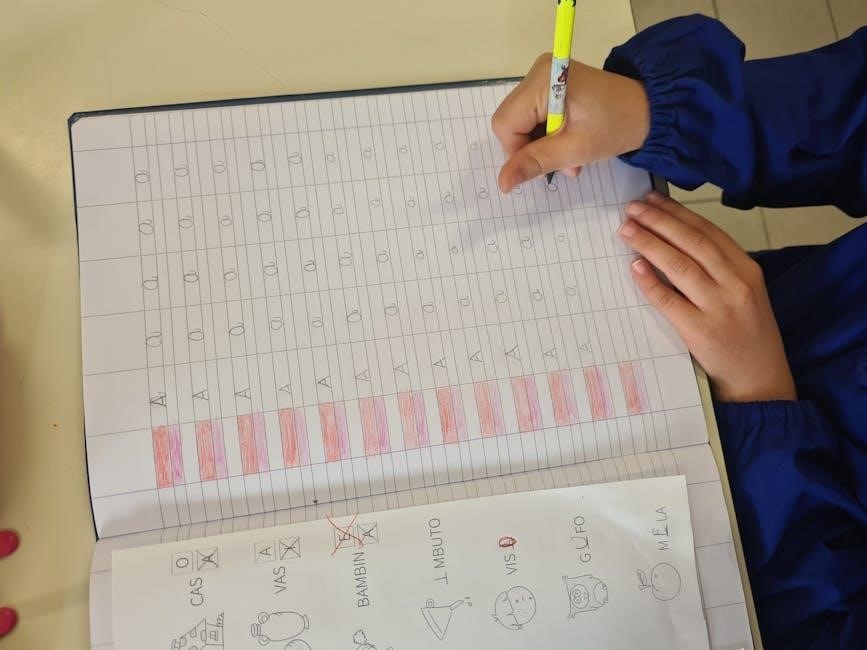
These worksheets are excellent for reinforcing learning and identifying areas needing further attention.
Sentence Analysis Worksheets: Deconstructing Sentences
Sentence analysis worksheets move beyond identifying individual parts of speech to examining their relationships within complete sentences. These exercises require students to dissect sentences, labeling each word with its corresponding grammatical role – noun, verb, adjective, adverb, preposition, and so on. This “deconstruction” process reveals the underlying structure of English sentences.
Typically, students are presented with sentences and instructed to identify not only the part of speech of each word, but also its function within the sentence – subject, predicate, object, modifier. More complex worksheets may ask students to identify phrases and clauses, further deepening their understanding of sentence composition.
This type of practice is invaluable for developing a strong grammatical foundation. By understanding how sentences are built, students can improve their writing clarity and avoid common errors. Exercises often include diagramming sentences, a visual method for illustrating grammatical relationships.
Mastering sentence analysis enhances comprehension and provides a framework for effective communication.
Error Correction Worksheets: Identifying and Fixing Mistakes
Error correction worksheets are a crucial component of parts of speech mastery, challenging students to apply their knowledge in a practical context. These exercises present sentences containing deliberate grammatical errors – incorrect verb tenses, misused pronouns, inappropriate adjective forms, or flawed preposition usage. Students must identify these mistakes and then correct them.
Worksheets often focus on common errors, such as subject-verb agreement, incorrect article usage (a, an, the), and confusion between similar words (e.g., their/there/they’re). The level of difficulty can vary, ranging from simple identification of errors to rewriting entire sentences for clarity and grammatical accuracy.
This type of practice reinforces understanding and develops critical thinking skills. Students aren’t just memorizing rules; they’re actively applying them to real-world language scenarios. Exercises may include multiple-choice questions or require students to rewrite sentences entirely.
Successfully completing these worksheets builds confidence and improves overall writing proficiency.

Using Parts of Speech Worksheets Effectively
Maximize learning by tailoring worksheets to age and skill level. Integrate them with diverse activities – writing, speaking, and reading – for holistic practice.
Utilize answer keys for self-assessment and track progress.
Age and Skill Level Considerations
Selecting appropriate worksheets is crucial for effective learning. For younger learners, focus on basic identification – nouns, verbs, and adjectives – using colorful, visually engaging PDFs. Simple fill-in-the-blank exercises are ideal, reinforcing concepts without overwhelming them.
As students progress, introduce more complex worksheets incorporating sentence analysis and error correction. Middle schoolers benefit from worksheets that challenge them to identify parts of speech within longer, more intricate sentences. Encourage them to deconstruct sentences, labeling each word’s function.
High school students can tackle advanced concepts like gerunds, infinitives, and phrases. Worksheets should focus on nuanced understanding and application, preparing them for standardized tests and academic writing. Consider worksheets that require students to rewrite sentences, correcting grammatical errors and improving clarity.
Differentiation is key. Provide varied levels of difficulty to cater to diverse learning needs. Some students may require additional support, while others may thrive on more challenging material. Regularly assess student understanding and adjust worksheet selection accordingly, ensuring everyone remains engaged and motivated.

Integrating Worksheets with Other Learning Activities
Worksheets shouldn’t exist in isolation. Enhance learning by combining them with interactive games. For example, “Parts of Speech Bingo” or “Sentence Scramble” can make practice fun and engaging. Encourage students to create their own sentences using specific parts of speech, fostering creativity and application.
Reading comprehension exercises provide excellent context for identifying parts of speech. Have students analyze passages, highlighting nouns, verbs, and adjectives. This reinforces understanding within a meaningful context, moving beyond rote memorization.
Writing assignments offer opportunities to apply learned concepts. Encourage students to consciously use varied parts of speech in their writing, focusing on descriptive language and precise verb choices. Peer review, focusing on grammatical accuracy, can be beneficial.
Utilize technology; Online quizzes and interactive exercises complement PDF worksheets. Digital tools often provide immediate feedback, allowing students to self-assess and identify areas for improvement. Blend traditional worksheets with modern technology for a well-rounded learning experience.
Answer Keys and Self-Assessment
Comprehensive answer keys are crucial for effective learning with parts of speech worksheets. They allow students to independently verify their answers, fostering a sense of ownership and responsibility for their progress. Immediate feedback is invaluable for solidifying understanding and correcting misconceptions.
Encourage self-assessment by prompting students to not just check their answers, but also why they made mistakes. Was it a misunderstanding of the concept, or a careless error? This metacognitive approach promotes deeper learning.
Worksheets designed for self-assessment can include scoring rubrics or checklists. These tools help students evaluate their own performance against clear criteria. This builds confidence and identifies areas needing further attention.

Beyond simple correctness, encourage students to analyze alternative answers. Could a different part of speech be used, and would it change the sentence’s meaning? This promotes critical thinking and a nuanced understanding of grammar. Regularly reviewing completed worksheets with answer keys reinforces learning.
Resources for Finding PDF Worksheets
Numerous online platforms offer free and premium parts of speech worksheets in PDF format. ESL-library.com provides grammar practice worksheets specifically for English language learners, accessible with a membership. Many educational websites host collections categorized by grade level and skill;
Teachers Pay Teachers is a valuable resource, featuring worksheets created by educators. These often include diverse exercise types and answer keys. Websites like K12Worksheets.com and Education.com offer a broad range of printable materials, including parts of speech identification and sentence analysis activities.
A simple Google search using keywords like “parts of speech worksheets PDF” yields a wealth of results. However, always preview the content to ensure it aligns with your learning objectives and is age-appropriate. Consider the source’s credibility before downloading.
Don’t overlook educational publishers’ websites; they frequently offer free sample worksheets. Utilizing a variety of resources ensures a comprehensive and engaging learning experience.

Advanced Parts of Speech Concepts
Exploring gerunds, infinitives, phrases, and clauses elevates grammar understanding. Worksheets focusing on these concepts refine sentence construction skills and address complex usage errors.
Mastering these nuances improves writing clarity and precision.
Gerunds and Infinitives
Gerunds and infinitives often pose challenges for English language learners, functioning as verbs yet taking on noun-like roles. Parts of speech worksheets specifically targeting these concepts are invaluable for solidifying understanding. These exercises typically involve identifying whether a verb should be expressed as a gerund (verb + -ing, acting as a noun) or an infinitive (to + verb).
For example, a worksheet might present sentences with blanks, requiring students to choose the correct form: “She enjoys _______ (read) books” versus “She needs _______ (read) for her class.” The first requires a gerund (“reading”), while the second needs an infinitive (“to read”).
Effective worksheets also explore verbs that take either a gerund or an infinitive (e.g., “remember”), those that take only one form, and those where the meaning changes depending on the form used. Practice includes rewriting sentences, combining clauses, and creating original sentences demonstrating correct usage. Advanced worksheets may incorporate error correction, asking students to identify and fix misused gerunds and infinitives within complex sentences, enhancing their grammatical precision.
Phrases and Clauses
Understanding phrases and clauses is crucial for constructing complex and grammatically correct sentences. Parts of speech worksheets dedicated to this topic move beyond individual words, focusing on groups of words functioning as a unit. These exercises typically differentiate between phrases (lacking a subject-verb pair) and clauses (containing both).
Worksheets often present students with sentences and ask them to identify dependent and independent clauses, highlighting the role of conjunctions in connecting them. Practice involves combining short, simple sentences into more complex ones using appropriate clauses.
Effective worksheets also cover different types of phrases – noun, verb, prepositional, adjectival, and adverbial – requiring students to identify their function within a sentence. Advanced exercises might involve sentence diagramming or rewriting sentences to emphasize specific phrases or clauses. Error correction practice focuses on identifying and rectifying misplaced or dangling modifiers within phrases and clauses, improving sentence clarity and precision.
Common Errors in Parts of Speech Usage
Parts of speech worksheets frequently dedicate sections to identifying and correcting prevalent grammatical errors. These exercises target areas where learners commonly stumble, such as incorrect verb tense, improper pronoun case (I vs. me), and misuse of articles (a, an, the).
Practice often involves sentence completion or error identification tasks, requiring students to pinpoint mistakes and provide corrections. Worksheets also address common noun errors – singular/plural forms and proper noun capitalization. Preposition usage is another frequent focus, as these words often cause confusion.
Effective worksheets present sentences with deliberately placed errors, challenging students to apply their knowledge. Advanced exercises might involve rewriting passages to eliminate ambiguity caused by incorrect adjective/adverb usage. Resources often include answer keys with explanations, fostering self-assessment and reinforcing correct grammatical principles. Mastering these common errors builds a strong foundation for clear and effective communication.
Leave a Reply
You must be logged in to post a comment.