scosche fm transmitter instruction manual
Scosche FM Transmitter Instruction Manual: A Comprehensive Guide (Updated 03/26/2026)
Welcome! This manual provides detailed guidance for Scosche FM transmitters, ensuring optimal performance and a seamless audio experience in your vehicle.
Scosche prioritizes user-friendly technology, and this guide will help you navigate setup, troubleshooting, and advanced features. Enjoy clear, wireless audio!
Scosche has established itself as a leading innovator in car audio accessories, and their FM transmitters are no exception. These devices offer a convenient solution for enjoying your music, podcasts, and audiobooks in vehicles lacking modern Bluetooth connectivity.
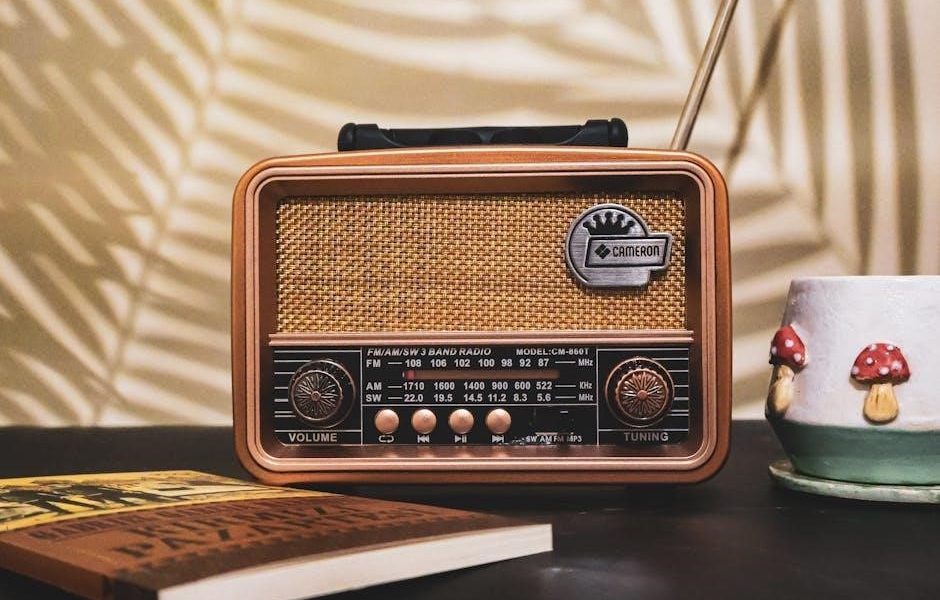
Essentially, a Scosche FM transmitter takes audio from your smartphone, MP3 player, or other device and broadcasts it over a selected FM radio frequency. This allows your car’s stereo system to play the audio wirelessly. Scosche transmitters are known for their ease of use, compact designs, and commitment to delivering high-quality sound.
This guide will walk you through everything you need to know, from initial setup to advanced features, ensuring you get the most out of your Scosche FM transmitter. Explore a world of audio possibilities!
Understanding FM Transmitter Technology
FM (Frequency Modulation) transmission relies on encoding audio signals onto radio waves within the 87.5 – 108;0 MHz frequency band. An FM transmitter receives an audio input, modulates it onto a carrier frequency, and then broadcasts this signal. Your car’s FM radio then receives and demodulates this signal, converting it back into audible sound.
Scosche FM transmitters utilize this technology to bridge the gap between your audio source and your vehicle’s stereo. They typically include a built-in modulator, an antenna for broadcasting, and a power source (often a 12V car adapter).
Signal strength and clarity are affected by factors like distance from radio stations, interference, and antenna placement. Modern transmitters employ features like noise reduction to mitigate these issues, providing a cleaner listening experience.
Benefits of Using a Scosche FM Transmitter
Scosche FM transmitters offer a convenient and cost-effective solution for enjoying your music in vehicles lacking modern audio connectivity. They eliminate the need for complicated installations, providing a wireless audio stream from your smartphone, MP3 player, or other devices.
Enjoy hands-free calling with models featuring Bluetooth connectivity, enhancing safety while driving. Scosche transmitters often include a USB charging port, keeping your devices powered on the go.
They are universally compatible with most vehicles equipped with an FM radio, offering broad accessibility. Experience improved audio quality compared to auxiliary cables, and easily switch between music and calls.
Setting Up Your Scosche FM Transmitter
Begin the process by securely connecting your Scosche FM transmitter to a compatible vehicle power source, preparing for optimal audio transmission and enjoyment.
Initial Power Connection & Vehicle Compatibility
Connecting to power is the first step. Most Scosche FM transmitters are designed to plug directly into your vehicle’s 12V/24V cigarette lighter or accessory power outlet. Ensure your vehicle’s ignition is switched on to provide power to the transmitter.
Vehicle compatibility is generally broad, working with most cars, trucks, and SUVs manufactured after the mid-1990s. However, some newer vehicles with non-standard power outlets might require an adapter. Always check your vehicle’s owner’s manual for specific power outlet specifications.
If the transmitter doesn’t power on, verify the connection is secure and the ignition is on. Avoid using the transmitter with the ignition off, as this can drain your vehicle’s battery. A stable power connection is crucial for reliable operation.
Choosing the Optimal Mounting Location
Selecting the right location is key for stability and accessibility. Scosche transmitters often feature adjustable mounts – either a vent clip, dashboard pad, or suction cup. Prioritize a spot that doesn’t obstruct your view of the road or interfere with vehicle controls.
Dashboard mounting offers stability, but avoid direct sunlight, which can overheat the device. Vent mounts provide easy access and cooling, while suction cups offer versatility. Ensure the surface is clean before attaching a suction cup for a secure hold.
Consider cable management to prevent tripping hazards. Route the audio cable neatly and avoid placing the transmitter where it could be accidentally dislodged during driving. A secure mount minimizes vibrations and ensures optimal performance.
Connecting to Your Audio Source (Aux Input)
Establishing a clear audio connection is crucial. Locate the auxiliary (AUX) input port on your Scosche FM transmitter – typically a 3.5mm jack. Connect one end of the included audio cable to this port.
Next, plug the other end into the AUX input of your smartphone, MP3 player, or other audio device; Ensure the connection is secure at both ends to prevent static or interruptions. Some vehicles may have an AUX input within the center console or dashboard.
Once connected, select the AUX input source on your car stereo. The Scosche transmitter will now relay audio from your device through the FM frequency. Verify the audio source selection on both devices for optimal sound quality.
Frequency Selection & Tuning
Achieving optimal audio clarity requires careful frequency selection and tuning. This section details how to find a clear, static-free FM frequency for your Scosche transmitter.
Finding a Clear FM Frequency
Locating an unused FM frequency is crucial for uninterrupted audio transmission. Begin by slowly scanning through the FM band using your Scosche transmitter’s scanning function. Pay close attention to areas with minimal or no radio station signals.
Listen carefully for static or interference; a clear frequency will exhibit minimal background noise. Note down several potential frequencies that appear promising. Remember that frequencies heavily populated in your area may be more prone to interference.
Consider testing these frequencies at different times of day, as radio traffic can fluctuate. A frequency clear during the day might become congested during rush hour. Prioritize frequencies further away from strong local stations for best results.
Scanning for Available Stations
Utilizing the scan function on your Scosche FM transmitter efficiently identifies available frequencies. Press and hold the scan button – typically indicated on the device – to initiate the automatic search. The transmitter will cycle through the FM band, briefly stopping at each frequency.
During the scan, listen for static or weak signals. The transmitter may automatically store frequencies with minimal interference; Some models display signal strength indicators, aiding in selection. After the scan completes, review the stored frequencies.
Manually test each stored frequency to confirm its clarity. If a frequency exhibits noticeable interference, discard it and repeat the scan. Remember, scanning provides a starting point; fine-tuning is often necessary for optimal performance.
Fine-Tuning for Optimal Signal Quality
Achieving the clearest audio requires precise fine-tuning after initial frequency selection. Slowly adjust the frequency dial on your Scosche FM transmitter, even slightly deviating from the scanned frequency. Listen intently for improvements in signal clarity and reduction in static.
Pay attention to how the audio quality changes with minor adjustments. A slight shift can often eliminate interference. If you encounter a strong local radio station, try moving a small increment away from its frequency.
Experiment with both upward and downward adjustments. Remember, optimal signal quality is a balance between minimal interference and a strong, clear transmission. Patience and careful listening are key to achieving the best possible sound;

Troubleshooting Common Issues
Encountering problems? This section offers solutions for typical Scosche FM transmitter issues, including no sound, static, and distorted audio, for a better experience.
No Sound Output – Common Causes
Experiencing silence? Several factors can cause a lack of audio from your Scosche FM transmitter; First, verify the power connection – ensure it’s securely plugged into the vehicle’s cigarette lighter or USB port.
Next, check the audio source; confirm your phone or MP3 player’s volume is turned up and that it’s properly connected via the AUX cable (if applicable). Confirm the FM transmitter is tuned to a correct, unobstructed frequency.
Inspect the AUX cable for damage. A faulty cable can prevent signal transmission. Also, ensure the transmitter isn’t muted. Finally, some vehicles require ignition to be on for power to flow to the accessory port – verify this is the case.
Static or Interference – Identifying the Source
Dealing with unwanted noise? Static or interference with your Scosche FM transmitter signal is common. Begin by changing the FM frequency; strong local radio stations often cause disruption. Try scanning for a clearer, less congested channel.
Check the AUX cable (if used) for damage or loose connections, as these can introduce noise. Move the transmitter to a different location in your vehicle – proximity to other electronics can cause interference.
External sources like neon signs or electrical equipment can also contribute. Activate noise reduction if your model has this feature. If the problem persists, try a different vehicle to rule out vehicle-specific electrical issues.
Distorted Audio – Adjusting Volume Levels
Experiencing crackling or unclear sound? Distorted audio from your Scosche FM transmitter usually stems from improper volume balancing. First, lower the volume on both your audio source (phone, MP3 player) and the transmitter itself. Gradually increase the transmitter volume until you reach a comfortable listening level.
Adjust your car stereo’s volume independently. Avoid maxing out any single device; a balanced approach is key. Check the AUX cable (if applicable) for secure connections. A faulty cable can introduce distortion.
Enable any available audio processing features on your source device. Some transmitters offer built-in equalization; experiment with these settings;
Advanced Features & Settings
Unlock enhanced audio! Explore noise reduction, automatic frequency switching (AFS), and Bluetooth pairing options for a customized and superior listening experience with your Scosche device.
Noise Reduction Technology Explained
Scosche’s advanced noise reduction technology actively minimizes background static and interference, delivering a cleaner, more enjoyable audio experience. This feature intelligently filters out unwanted frequencies commonly found in the FM broadcast spectrum.
It works by analyzing incoming audio signals and suppressing noise before it reaches your car speakers. The result is significantly improved clarity, especially when transmitting music or podcasts. Different Scosche models may offer varying levels of noise reduction capability.
To optimize performance, ensure the noise reduction setting (if adjustable on your model) is appropriately configured. Experiment with different settings to find the best balance between noise reduction and audio fidelity for your specific driving environment and audio source.
Automatic Frequency Switching (AFS) Functionality
Scosche’s Automatic Frequency Switching (AFS) is a convenient feature designed to simplify setup and maintain a stable FM transmission. When activated, AFS automatically scans for the clearest available FM frequency in your area.
This eliminates the need for manual frequency selection and reduces the likelihood of interference from existing radio stations. The transmitter continuously monitors signal quality and will re-scan if interference is detected, ensuring uninterrupted audio playback.
To utilize AFS, simply enable the function within the device’s settings menu. Note that while AFS is highly effective, occasional manual adjustments may still be necessary in areas with particularly crowded FM spectrums.
Bluetooth Pairing & Music Streaming (If Applicable)
For Scosche FM transmitters with Bluetooth capability, pairing your smartphone or other Bluetooth-enabled device is straightforward. First, ensure your transmitter is in pairing mode – typically indicated by a flashing blue light.
On your device, navigate to the Bluetooth settings and search for available devices. Select your Scosche transmitter from the list. You may be prompted to enter a pairing code (usually “0000”). Once connected, you can stream music, podcasts, and other audio directly from your device to your car stereo.
Enjoy hands-free calling functionality, if supported, and control playback directly from your smartphone or the transmitter itself. A stable Bluetooth connection ensures high-quality audio streaming.

Specific Scosche FM Transmitter Models
Explore detailed setup guides for popular Scosche models like the BTFM, Car Charger FM Transmitter, and AccuMount, optimizing your listening experience today!
Scosche BTFM – Detailed Instructions
Getting Started: The Scosche BTFM is a Bluetooth FM transmitter designed for seamless audio streaming. Begin by plugging the device into your vehicle’s 12V accessory port. The BTFM will automatically power on, initiating Bluetooth pairing mode.
Bluetooth Connection: On your smartphone or audio device, enable Bluetooth and search for available devices. Select “Scosche BTFM” from the list to establish a connection. Once paired, you can stream music, podcasts, or audiobooks wirelessly.
FM Frequency Selection: Use the BTFM’s buttons to select an open FM frequency. Scan for a clear channel, minimizing static interference. Adjust the volume on both your device and the BTFM for optimal sound quality. The built-in microphone enables hands-free calling.
Scosche Car Charger FM Transmitter – Setup Guide
Initial Setup: The Scosche Car Charger FM Transmitter combines charging capabilities with wireless audio transmission. Insert the transmitter into your vehicle’s 12V power outlet. It will power on, ready for pairing. Locate the auxiliary input on the device – this is for non-Bluetooth audio sources.
Audio Connection: If using an aux cable, connect your device to the transmitter’s aux input. For Bluetooth connectivity, activate pairing mode on the transmitter and search for it on your smartphone. Select “Scosche” from the Bluetooth device list.
Frequency Tuning: Choose an unused FM frequency using the transmitter’s controls. Scan for a clear channel to avoid interference. Fine-tune the frequency for optimal audio clarity and enjoy hands-free calling with the integrated microphone.
Scosche AccuMount – Integration with FM Transmission
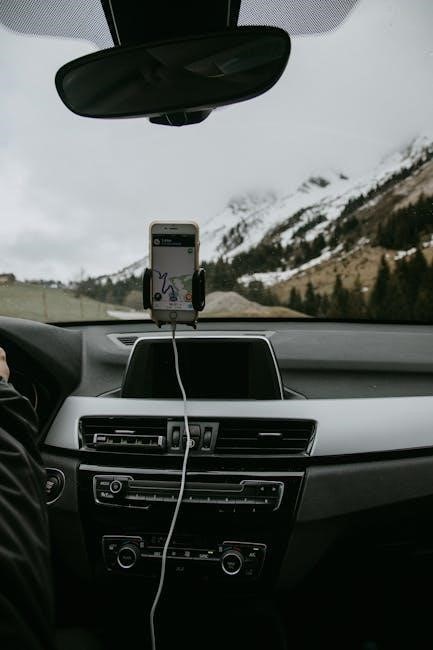
Secure Mounting: The Scosche AccuMount system provides a stable and convenient mounting solution for your FM transmitter. Begin by cleaning your windshield or dashboard surface. Attach the AccuMount base, ensuring a firm grip. Then, securely connect your Scosche FM transmitter to the mount.
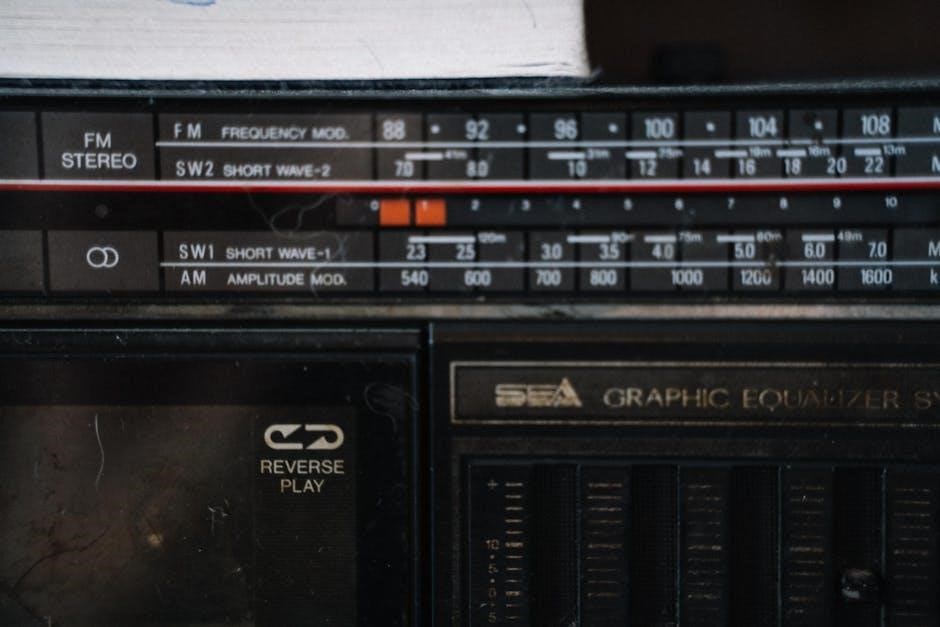
Optimized Positioning: Proper placement minimizes interference and maximizes signal strength. Avoid obstructing the transmitter with metallic objects. The AccuMount’s adjustable design allows for optimal viewing and access to controls.
Enhanced Stability: This integration ensures your transmitter remains securely in place, even during bumpy rides. Combine the stability of AccuMount with the audio quality of Scosche FM transmission for a superior in-car experience.
Safety Precautions & Warnings
Important Safety Notes: Always operate the device within safe temperature ranges. Avoid distractions while driving, and handle the transmitter with care for longevity.
Operating Temperature & Environmental Considerations
Optimal Performance Range: Your Scosche FM transmitter is designed to function reliably within a temperature range of 32°F to 104°F (0°C to 40°C). Operating outside this range may cause temporary malfunction or potentially damage the device.
Avoid Extreme Conditions: Do not expose the transmitter to direct sunlight for extended periods, as excessive heat can degrade internal components. Similarly, avoid prolonged exposure to moisture, rain, or humidity.
Storage Guidelines: When not in use, store the transmitter in a cool, dry place away from extreme temperatures and direct sunlight. This will help maintain its functionality and extend its lifespan. Avoid storing in areas with high dust levels.
Environmental Responsibility: Dispose of the device responsibly according to local electronic waste regulations. Do not incinerate.
Avoiding Distractions While Driving
Prioritize Safe Driving: Your safety is paramount. Always focus your full attention on the road while operating a vehicle. Avoid any activity that could divert your attention from driving.
Setup Before Travel: Configure your Scosche FM transmitter – including frequency selection and audio source connection – before beginning your journey. Do not attempt to adjust settings while driving.
Minimize Interaction: Limit interaction with the device during operation. If adjustments are absolutely necessary, pull over to a safe location before making any changes.
Voice Control (If Applicable): Utilize voice control features, if available, to minimize manual operation. Remember, even voice commands can be distracting; use them judiciously.
Proper Device Handling & Storage
Gentle Handling: Treat your Scosche FM transmitter with care. Avoid dropping, impacting, or subjecting it to excessive force. This can damage internal components and affect performance.
Avoid Extreme Temperatures: Do not leave the device exposed to direct sunlight or extreme temperatures for extended periods. Heat can warp plastic parts and damage the electronics.
Storage Guidelines: When not in use, store the transmitter in a cool, dry place, away from dust and moisture. A protective case is recommended for long-term storage.
Cable Management: Properly coil and store any connecting cables to prevent tangling and damage. Avoid bending cables sharply, as this can compromise their integrity.
Maintaining Your Scosche FM Transmitter
Keep it pristine! Regular cleaning and occasional firmware updates (when available) will ensure your Scosche FM transmitter delivers peak performance for years.
Cleaning & Dust Removal
Maintaining a clean device is crucial for optimal performance. Dust and debris can accumulate around the ports and buttons, potentially hindering functionality. Regularly use a soft, dry microfiber cloth to gently wipe down the exterior of your Scosche FM transmitter.
For stubborn dirt, lightly dampen the cloth with distilled water – never use harsh chemicals or abrasive cleaners. Pay particular attention to the charging port and any crevices where dust might gather. Compressed air can also be used cautiously to dislodge particles from hard-to-reach areas.
Important: Always ensure the device is powered off and disconnected from any power source before cleaning. Avoid excessive moisture, and allow the transmitter to dry completely before reconnecting it. Consistent cleaning will extend the lifespan and ensure reliable operation.
Firmware Updates (If Applicable)
Check for firmware updates periodically on the official Scosche website (scosche.com) to ensure your FM transmitter has the latest features and bug fixes. Firmware updates can improve performance, enhance compatibility, and address potential security vulnerabilities.
The update process typically involves downloading the firmware file to your computer and then transferring it to the transmitter via a USB connection. Follow the detailed instructions provided with the firmware to avoid any issues during the update.
Important: Do not interrupt the update process, as this could damage the device. Ensure the transmitter has sufficient battery life or remains connected to a power source throughout the update. Regularly updating firmware keeps your Scosche device functioning optimally.
Extending the Lifespan of Your Device
Proper care significantly extends the life of your Scosche FM transmitter. Avoid exposing the device to extreme temperatures, direct sunlight for prolonged periods, or excessive moisture. These conditions can damage internal components and reduce performance.
When not in use, store the transmitter in a cool, dry place, away from dust and potential physical impacts. Regularly clean the device with a soft, dry cloth to remove any accumulated dust or debris. Avoid using harsh chemicals or abrasive cleaners.
Handle the transmitter with care, avoiding dropping or subjecting it to unnecessary stress. Following these simple guidelines will ensure years of reliable performance from your Scosche FM transmitter.
Scosche Support & Resources
Need assistance? Scosche offers extensive online support, detailed manuals, and a dedicated customer service team to resolve any issues quickly and efficiently.
Official Scosche Website & Instruction Manuals
Accessing comprehensive support is easy! Visit the official Scosche website at scosche.com/instructions to find the latest instruction guides specifically tailored to your Scosche FM transmitter model.
The website provides downloadable PDFs, troubleshooting tips, and frequently asked questions. Ensure you have the correct model number for accurate information. Scosche regularly updates its online resources, so check back often for new content and improvements. You can also find helpful videos demonstrating setup and operation.
Cookie Notice: Please be aware the website functionality may be impacted if cookies are disabled in your browser settings; Enjoy seamless access to all Scosche support materials!
Frequently Asked Questions (FAQ)
Q: My transmitter isn’t working – what should I do? A: First, ensure a secure power connection and proper audio source linkage. Verify the selected FM frequency is clear of existing stations.
Q: Why is there static or interference? A: Try different FM frequencies. Interference can stem from nearby radio signals or electrical devices. Relocate the transmitter for better reception.
Q: How do I improve audio quality? A: Adjust the volume levels on both your audio source and the transmitter. Utilize noise reduction features if available. Ensure a clean aux cable connection.
Q: Where can I find more help? A: Visit scosche.com for detailed manuals and support.
Contacting Scosche Customer Support
Need further assistance with your Scosche FM transmitter? Our dedicated support team is here to help! For immediate support, please visit the official Scosche website at scosche.com.
You’ll find a comprehensive knowledge base, troubleshooting guides, and downloadable instruction manuals. Alternatively, you can reach our customer support team directly via email through the “Contact Us” section on the website.
Please have your model number and purchase date ready to expedite the support process. Scosche is committed to providing excellent customer service and ensuring your complete satisfaction with our products. We value your feedback!
Leave a Reply
You must be logged in to post a comment.